Vet Emergency Number: Separate Emergencies From Routine Calls
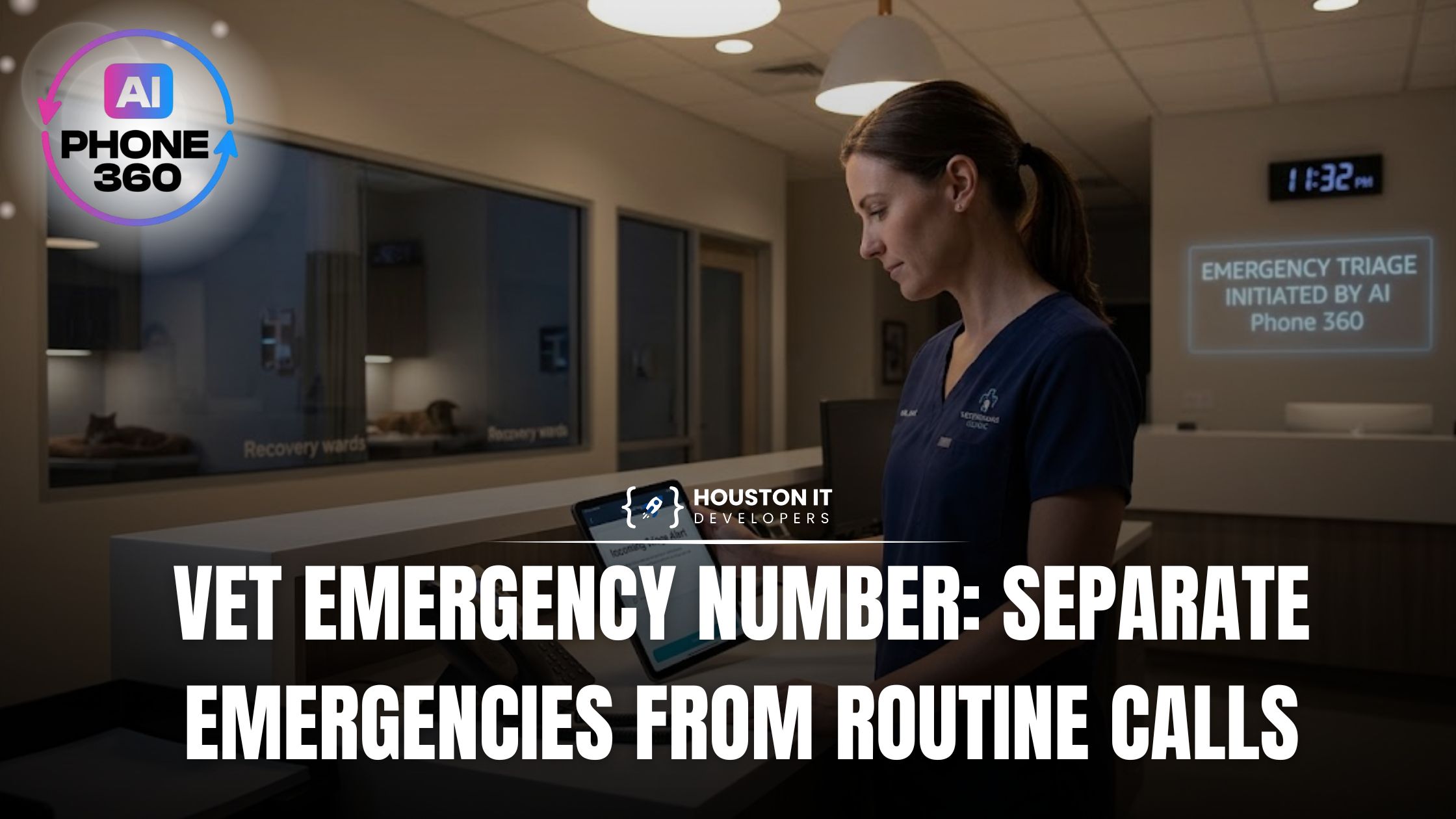
Not every call your veterinary clinic receives is an emergency. But every call feels urgent to the pet owner on the other end of the line.
The real challenge is not answering more calls. It is knowing which ones cannot wait and acting on them immediately.
Veterinary clinics receive a large share of their calls outside business hours — the highest rate of any practice type. Of those after-hours calls, roughly a quarter are true emergencies requiring immediate triage, while most are non-urgent and could be scheduled for the next business day. Without a system to separate them, every call gets treated the same way: it either reaches an overwhelmed staff member or lands on voicemail and disappears.
This article walks through how smart call triage works, what it means for your clinic's revenue and patient outcomes, and how AI Phone 360 handles the separation automatically.
Why Veterinary Clinics Cannot Treat Every Call the Same Way
A dog that ingested chocolate at 10 PM and a client calling to reschedule a wellness visit are both calling your clinic. One needs an on-call vet within the hour. The other needs a calendar slot next Tuesday. Treating them identically is what causes the real problems.
| The Consequence | What Actually Happens |
|---|---|
| On-call vet reached for non-emergencies | Staff burnout, resentment, and high turnover |
| True emergencies routed to voicemail | Delayed treatment, preventable losses, and lost client trust |
| No after-hours triage system at all | Most after-hours callers hang up and call the next clinic instead |
| Front desk overwhelmed during peak hours | Nearly 1 in 4 calls go unanswered during business hours, and most of those callers never call back |
According to AgentZap's 2026 analysis, the average veterinary practice misses about 22% of incoming calls, translating to significant lost annual revenue per clinic. That is not a staffing problem. It is a systems problem.
What a Vet Hotline Number Actually Needs to Do
When pet owners search for a vet hotline number or a 24/7 vet emergency number, they are not looking for a recorded menu. They want to reach someone who can tell them whether their pet needs to go to the emergency room right now or whether it can wait until morning. That requires triage, not just answering.
Effective call triage for veterinary clinics separates calls into three buckets:
| Call Type | Examples | Correct Response |
|---|---|---|
| True emergency | Bloat, urethral obstruction, toxin ingestion, trauma, difficulty breathing | Immediate escalation to on-call vet via SMS or call |
| Urgent but not critical | Vomiting for several hours, limping, eye discharge, minor wounds | After-hours appointment booked or callback scheduled first thing |
| Routine | Scheduling, prescription refills, vaccine records, general questions | Information captured, handled next business day |
A system that cannot make this distinction pushes every call into the same channel, which either exhausts your team with non-emergencies or leaves true emergencies unaddressed.
The Cost of Getting Triage Wrong
The stakes in veterinary medicine are higher than most industries. A missed call from a pet owner dealing with a GDV case, a urethral obstruction in a cat, or a toxin ingestion is not just lost revenue. It is a preventable outcome that affects your clinic's reputation for years.
Research indicates that more than one-third of after-hours calls represent genuine emergencies where timely intervention is the difference between a full recovery and a much worse outcome. Beyond the clinical stakes, the financial picture is significant: with a typical client lifetime value well into the thousands of dollars, clinics that let calls slip to voicemail lose both the immediate visit and the years of care that would have followed. Practices that add AI call handling report unanswered calls dropping sharply and meaningful annual revenue recovered.
For context on how AI phone systems work in broader healthcare settings, read our guide on the AI phone answering service to understand the full picture before applying it to your clinic.
How AI Phone 360 Handles Veterinary Call Triage
AI Phone 360 is not a general-purpose answering service. Our AI receptionist is built to handle call types that carry real urgency, including the kind veterinary clinics deal with every day. Here is how the triage system works for vet clinics specifically.
| Situation | What AI Phone 360 Does |
|---|---|
| After-hours call describing acute symptoms | Gathers symptom details, species, age, and onset, then SMS-routes to the on-call vet immediately |
| Non-urgent concern outside office hours | Captures name, contact, and pet details, and books a callback or next-day appointment |
| Routine call when the front desk is overwhelmed | Answers overflow calls in real time so no caller hits a busy signal |
| New client calling for the first time | Captures intake information, answers FAQs, and schedules a first visit |
| Prescription refill request | Collects medication details and relays to the pharmacy team without interrupting clinical staff |
Every call is recorded, transcribed, and logged. Your team walks in each morning with full context on what came in overnight, who needs a callback, and which situations were escalated. Clinics using AI answering report nearly all after-hours calls answered compared with a fraction on voicemail, and a large reduction in non-emergency calls reaching the on-call vet.
The system connects with your existing scheduling tools, CRM, and 15+ business apps via our integrations. If you are already using a cloud-based phone system, our guide on cloud phone systems and customer satisfaction covers how AI layers on top without disrupting your current setup.
AI Phone 360 vs. Traditional Vet Answering Options
| Option | After-Hours Coverage | Emergency Triage | Burnout Risk |
|---|---|---|---|
| Voicemail only | No live response | None | High for clients |
| Human answering service | Limited by shift hours | Inconsistent | Moderate |
| On-call vet's personal phone | Unpredictable | Manual | Very high |
| AI Phone 360 | 24/7, every call answered | Automated and consistent | Near zero |
The transition does not require replacing anything. Setup takes about 90 seconds — forward your existing vet phone number or port it directly. Callers reach a professional, brand-consistent interaction every time, whether it is 2 PM on a Tuesday or 11 PM on a Saturday. Plans start from $19.99/mo. If you are weighing phone-system options more broadly, our breakdown of VoIP phone systems and AI upgrades for small businesses walks through the decision clearly.
Final Thoughts on Vet Emergency Numbers
Veterinary clinics that separate emergencies from routine calls answer fewer calls with more impact. The on-call vet only gets called when it genuinely matters. The front desk opens each morning with overnight context already captured. And pet owners who call at 11 PM feel heard rather than abandoned.
Here is a simple way to think about it: if your clinic misses more than five calls per day, and even half of those are bookable appointments or emergencies, you are losing thousands of dollars in monthly revenue and putting patient outcomes at risk. AI Phone 360 fixes the phone layer of your clinic without adding headcount, without disrupting your current number, and without a long setup process.
Sign up at AI Phone 360 and get your clinic's AI receptionist live today. Available on the App Store and Google Play so you can manage calls, review transcripts, and update routing rules from anywhere.
FAQs
What is a vet hotline number?
A dedicated phone line pet owners call for veterinary guidance outside clinic hours. Effective setups use AI triage to separate emergencies from routine concerns before escalating to a live vet.
Is there a free 24/7 vet hotline?
National pet poison helplines and university veterinary school hotlines exist for general guidance. For clinic-specific triage and bookings, AI Phone 360 provides 24/7 coverage at a fraction of the cost of a human answering service.
How do I know if my pet needs emergency care?
Call a vet emergency number immediately for difficulty breathing, a bloated abdomen, suspected toxin ingestion, inability to urinate, seizures, uncontrolled bleeding, or collapse. These cannot wait regardless of the time.
How does AI triage identify a real emergency?
AI Phone 360 asks structured questions about the pet's symptoms, species, age, and onset time, then either escalates to your on-call contact via SMS or books an appropriate next-day appointment.
Can AI Phone 360 integrate with my scheduling software?
Yes. AI Phone 360 connects with 15+ business tools, including common veterinary practice-management systems. Integration is configured during the 90-second setup.