5 Ways Cloud Phone Systems Improve Customer Satisfaction
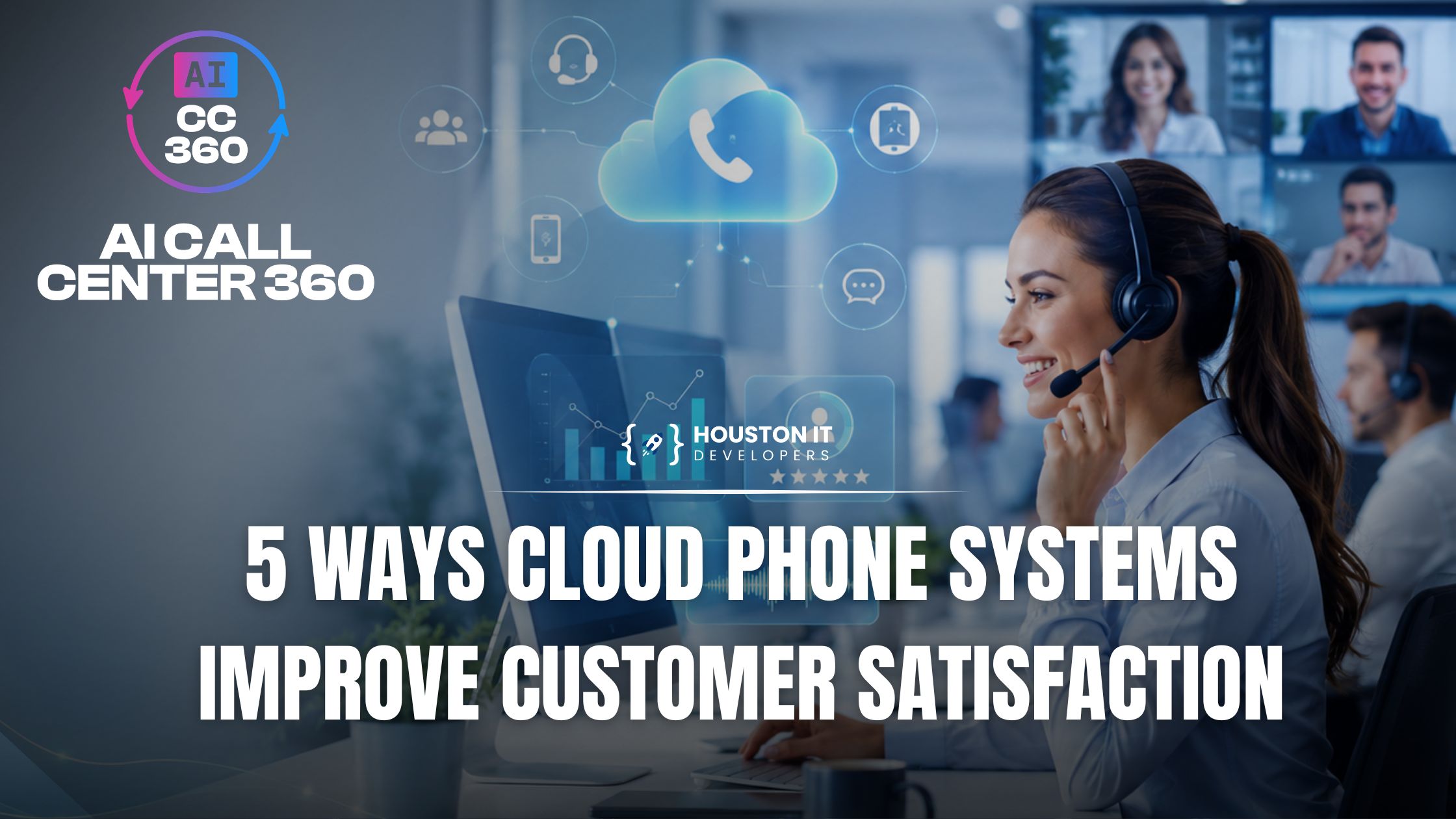
If you have ever called a business and been put on hold for ten minutes, only to hang up and never call back, you already understand what is at stake. Customer satisfaction lives and dies by how quickly and smoothly people can reach you. That is exactly why more businesses are turning to cloud phone systems. They are not just a tech upgrade; they are a direct investment in how customers feel about your brand every time they pick up the phone.
Here is what the data says:
- 75.5% of consumers have switched from one business to another because of poor customer service.
- 83% of companies report losing customers, missing deadlines, or laying off employees due to communication issues.
What Is a Cloud Phone System, and Why Does It Matter?
Before we get into the five ways it helps, it is worth quickly answering the question we hear a lot: what is a cloud phone system, exactly?
A cloud phone system is a business phone solution that runs entirely over the internet rather than through traditional copper phone lines or on-premise hardware. Instead of bulky equipment sitting in a back office, everything is hosted on remote servers. Calls, voicemails, routing rules, and data are all managed through software you can access from any device.
For businesses, this means no more expensive hardware, no complicated wiring, and no single point of failure. You get a flexible, scalable system that grows with you, and your customers get a consistently better experience on the other end of the line.
At AI Phone 360, we have built our platform around exactly this model, using AI to take it even further so small businesses can answer every call, book appointments, and handle customers around the clock without extra staff.
1. Faster Response Times Mean Fewer Customers Lost
Speed is one of the biggest factors in whether a customer stays or walks. 90% of customers say a quick response is critical when they have a question, and 60% of them expect "immediate" to mean within 10 minutes.
Traditional phone setups cannot reliably deliver on that. When your receptionist is on another call, unavailable, or it is outside business hours, customers get voicemail, and most of them do not leave a message. They just move on.
Cloud-based VoIP phone systems solve this by making your business reachable at all times. Features like auto-attendants, simultaneous ring, and AI-powered answering mean that when someone calls, something or someone picks up right away. At AI Phone 360, our AI receptionist answers on the first ring, every time, day or night. There is no queue, no hold music, no waiting until Monday morning.
For industries like HVAC, plumbing, or healthcare where urgency is part of the job, this responsiveness can be the difference between winning a customer and losing them to the next search result.
2. Smarter Call Routing Gets Customers to the Right Person
One of the most frustrating experiences in customer service is being transferred multiple times before reaching someone who can actually help. Every transfer is a friction point. Every wrong department is a small erosion of trust.
These modern systems use intelligent call routing to solve this. Based on the caller's input, the time of day, the department they need, or even who they have spoken with before, the system routes the call automatically to the most appropriate person or team.
Here is what smart routing typically includes:
- IVR menus that let callers self-select their need without waiting for a human to ask
- Skills-based routing that matches callers to agents who are best equipped to help
- Time-based routing that redirects calls after hours to an AI assistant or voicemail with a callback option
- Geographic routing for businesses with multiple locations
The result is that customers spend less time explaining their situation to the wrong person and more time actually getting their problem solved. That is a direct, measurable improvement in satisfaction scores.
At AI Phone 360, we layer AI on top of this so the system does not just route calls mechanically. It understands the intent behind what the caller says and handles the whole interaction if it can, only escalating when it needs to.
3. 24/7 Availability Removes the Biggest Gap in Customer Service
Most businesses are open eight or nine hours a day. Most customer needs do not follow that schedule.
Someone looking for a dentist appointment might call at 7 PM after work. A homeowner with a leaky pipe is not waiting until 9 AM. A potential client in a different time zone may be ready to talk when your office is closed. If your phone system can only handle calls during business hours, you are leaving a significant portion of your customers without support.
Cloud-based VoIP phone systems, especially those with AI capabilities, eliminate this gap entirely. The phone does not know what time it is. It answers, helps, schedules, and follows up regardless of when the call comes in.
Our 24/7 answering service at AI Phone 360 was built for exactly this. The AI is trained on your business specifics, so it can answer questions about your services, pricing, and availability without sounding like a generic bot. It speaks in your brand voice, captures lead information, and can book appointments directly into your calendar.
For a small business owner who cannot afford to staff overnight or on weekends, this capability is genuinely transformative. You capture leads you would have otherwise missed, and your customers feel like you are always there for them.
4. CRM Integration and Call Data Personalize Every Interaction
Customers want to feel known. When they call your business and have to re-explain their situation from scratch every single time, it signals that you do not remember them, and that feels like indifference.
A well-integrated phone platform that connects to your CRM changes this dynamic significantly. When a returning customer calls, the system can pull up their account details, past interactions, and purchase history instantly. The person answering, whether human or AI, already knows who they are and why they might be calling.
This kind of context-aware service:
- Reduces call time because agents are not gathering basic information repeatedly
- Allows for more personalized conversations that feel natural, not scripted
- Creates consistent follow-up so nothing falls through the cracks
- Gives managers visibility into trends, common issues, and customer behavior over time
At AI Phone 360, every call is automatically logged with a transcript, a summary, and caller contact information. That data flows directly into your workflow so your team always has context before a callback. Our features page covers how this works in more detail, including analytics dashboards that help you spot patterns in what customers are asking and when.
The data side of cloud systems is genuinely underrated. It is not just about answering calls faster; it is about getting smarter with every call you take.
5. Reliability and Scalability Keep the Experience Consistent
Poor call quality, dropped calls, and system outages are killers for customer trust. If someone cannot get through to you reliably, they stop trying. Traditional phone systems tied to physical hardware are vulnerable to local outages, equipment failures, and the simple problem of being overwhelmed by volume during busy periods.
Cloud systems built on distributed server infrastructure handle this differently. Because the system lives in the cloud, calls are rerouted automatically if one server location has a problem. Cloud contact center software is much more resilient than on-premise systems, as providers normally host them across multiple data centers in various regions, ensuring traffic is automatically rerouted if one location experiences an outage.
Scalability is equally important. When your call volume spikes, whether from a promotion, a seasonal rush, or just natural business growth, a cloud phone system scales up without you having to buy new hardware or hire more staff immediately. The system handles the volume, and your team gets back to the overflow when they can.
For businesses using AI Phone 360, this means you are never sending calls to voicemail because you are at capacity. The AI handles as many simultaneous calls as come in. Whether it is two or two hundred, every caller gets answered.
Industries like real estate, healthcare, and home services show this most clearly. These businesses face unpredictable call spikes and need a phone infrastructure that can absorb demand without dropping calls or degrading quality.
You can explore how AI Phone 360 serves specific industries like HVAC, medical clinics, and law firms to see how reliability and scalability work in practice for those use cases.
Final Thoughts on Cloud Phone Systems
Cloud phone systems do more than modernize your business phone setup. They help you answer faster, route calls better, stay available after hours, personalize every interaction, and deliver a more reliable customer experience overall. When customers can reach you easily and get help without friction, satisfaction improves and trust grows.
The next step is simple. Review how your current phone process affects missed calls, slow responses, and inconsistent follow-up, then choose a system that helps you fix those gaps. If you want a solution built for small businesses, sign up for AI Phone 360 and see how it can help you manage calls more efficiently.
You can also get the app here: Download on the App Store or Get it on Google Play.
FAQs
What are the best cloud phone systems for small businesses?
Small businesses often choose tools like AI Phone 360 along with platforms such as RingCentral, Zoom Phone, and Dialpad because they balance ease of use with strong communication features. The right choice usually depends on budget, team size, and whether you need extras like AI call handling or CRM integration.
What are cloud phone systems?
Cloud phone systems are business phone services that run over the internet instead of traditional phone lines. They manage calls, voicemail, and routing through software that works on any connected device.
How much does a cloud phone system cost?
Pricing typically ranges from basic monthly per-user plans to higher-tier packages with advanced features. Costs vary based on call volume, included tools, and whether you add automation or integration features.