Why Your Small Business VoIP Phone System Needs an AI Upgrade
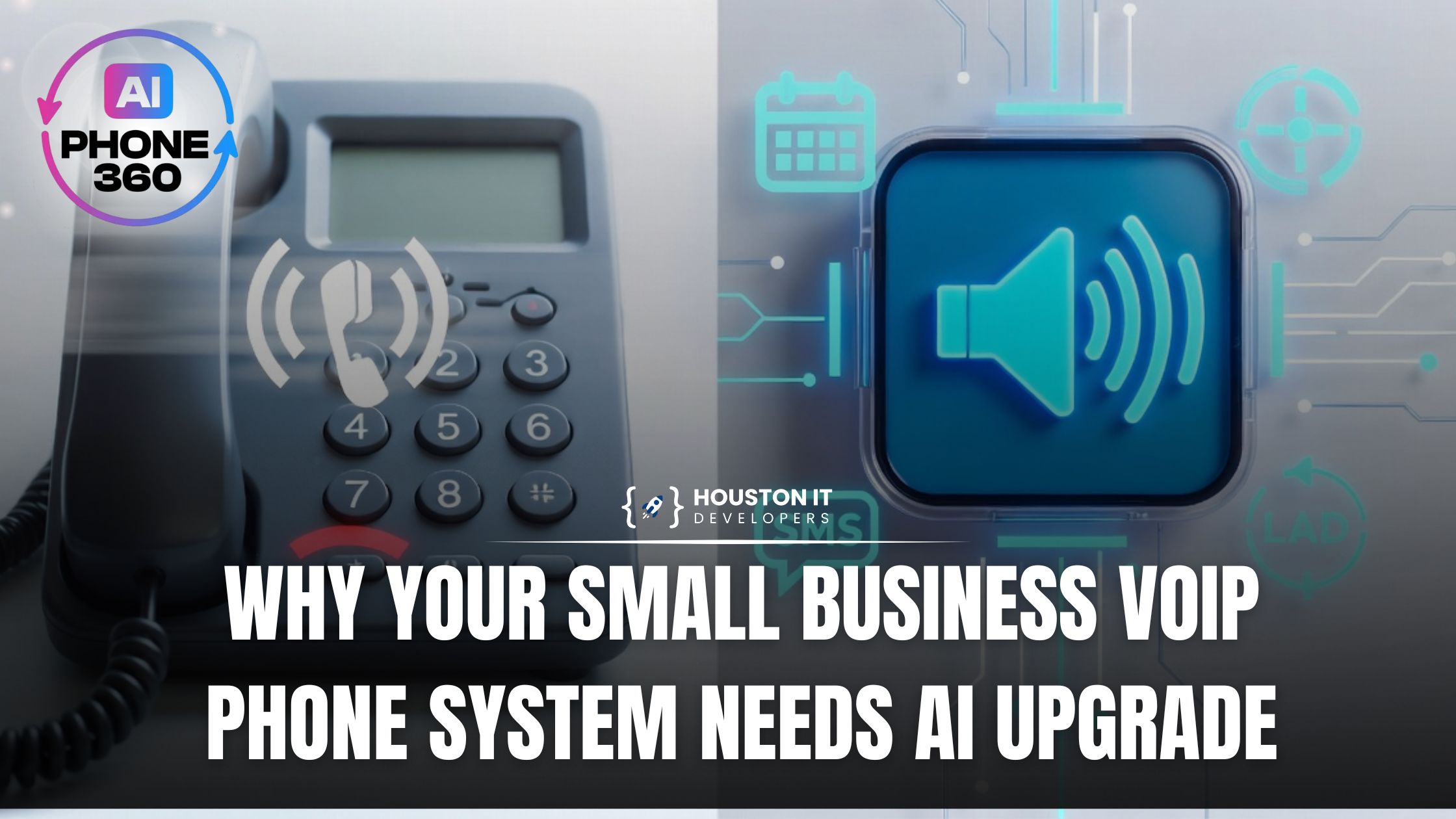
Traditional small business VoIP systems are built on a simple premise: route calls. A call comes in, and your VoIP phone system for small business forwards it to your cell phone, your desk, or a team member. It is practical. It works. But it does not scale when you are getting calls while you are in the field, with a client, or asleep at 2 AM.
Meanwhile, your competitors are using AI-powered systems that answer calls, book appointments, qualify leads, and send SMS follow-ups automatically. This is not science fiction. It is already here, and it is changing how small businesses handle customer communication. Here is what you need to know about making the jump from traditional to AI-enhanced calling systems.
- Over 60% of small and medium-sized businesses worldwide already use VoIP for communications, making them the largest customer segment.
- 64% of small businesses plan to adopt AI chatbots by 2026, up from 38% in 2024, signaling rapid acceleration toward intelligent business communications.
What Traditional VoIP Phone System Small Business Does (And Doesn't Do)
Your current VoIP system probably works like this. A customer calls. The system rings your phone, your colleague's phone, or a desk phone in the office. Someone picks up or doesn't. If they don't, a voicemail records. You listen later, call back manually, and hope it is still a real opportunity.
This approach solves one problem: making it possible to receive calls over the internet instead of traditional landlines. It is cheaper than old PBX systems and way more flexible for remote teams. You do not need physical hardware. You do not need an IT department to maintain it.
But it doesn't solve what happens when the phone rings and nobody's there to pick it up.
The pressure falls on you. Check voicemail constantly. Return calls quickly. Hope you don't miss the one lead that could move the needle. Hire a human receptionist if you can afford it. Train them on your business. Manage their schedule. Pay their salary plus benefits. There is friction at every step. And friction means lost revenue.
The Missed Call Problem in Small Business
Three out of four consumers have left a business entirely because of poor customer service. When someone calls a small business and gets voicemail, they rarely wait around. They call your competitor instead.
A standard VoIP phone for small business captures some of this damage by forwarding calls to your cell, but it doesn't actually solve the underlying problem. You are still the bottleneck. If you don't answer in the next 10 seconds, the opportunity starts slipping away.
Real estate agents lose listings because they didn't pick up during a showing. HVAC companies miss emergency calls after hours. Dental practices see no-show rates climb because confirmation calls never happen. Restaurants miss reservation requests during the dinner rush. The problem isn't the technology. It is that call handling was designed for a different era of work.
Why Modern Teams Are Utilizing AI for Customer Service
This is where the paradigm shifts. AI for customer service has moved beyond novelty into necessity. We are not talking about voice robots that sound like robots. We are talking about AI systems trained on millions of real business calls, designed to sound conversational, handle complexity, and actually solve the customer's problem.
An AI-powered VoIP phone system small business upgrade works differently from the ground up.
A call comes in. Within milliseconds, your AI receptionist answers. It greets the caller with a natural-sounding voice. It can be customized to match your brand, your tone, even your accent. Most callers genuinely don't realize they are talking to AI.
The system then goes to work. It understands what the caller needs. For an HVAC emergency, it prioritizes that call to your on-call tech. For a routine appointment, it checks your calendar in real-time and books the available slot. For a sales inquiry, it qualifies the lead and captures all the details.
Then it texts you the summary. No voicemail to check. No messages to decode. Just a clean SMS with the essential information so you can follow up when you are ready.
This is AI for customer service in practice, and the results speak for themselves. Businesses using AI for customer service see more leads captured, appointment no-shows drop, emergency calls get routed in seconds instead of minutes, and the cost per interaction drops to pennies compared to human handling.
How AI Integrates With Your Existing VoIP Phone System
The integration process keeps your existing VoIP setup in place while adding AI on top of it. You do not replace your system, you enhance it with automation that handles calls, routing, and data capture in real time.
| Area | What AI Does | Result |
|---|---|---|
| Phone Numbers | Keeps or ports your existing number | No disruption to customers |
| Call Handling | Answers, qualifies, and routes calls | Faster response and fewer missed leads |
| Scheduling | Syncs with your calendar | No double bookings |
| CRM Integration | Logs and organizes lead data | Cleaner follow-ups |
| Team Routing | Sends calls based on rules | Better internal efficiency |
This setup turns your phone system into an automated front desk that works 24/7. It reduces manual handling so your team focuses only on high-value conversations. It also scales easily from solo operators to multi-person teams without changing infrastructure.
Real Outcomes From Deploying AI for Customer Service
Businesses that implement AI for customer service see meaningful operational cost savings. For routine tasks, the savings are even larger because the AI isn't calling in sick, taking PTO, or needing training.
But the bigger impact isn't cost. It is capture rate. You are not missing calls anymore. You are converting more of them.
Real estate teams close more deals. Dental practices see no-shows drop because SMS confirmations actually reach people. Medical clinics reduce insurance pre-checks from a manual nightmare to an automated handoff. HVAC companies field emergency calls at 2 AM without hiring third-shift staff. Restaurants book reservations without managing a hostess schedule.
The VoIP phone system small business category has evolved. It is not just about making calls cheaper anymore. It is about making the calls you do get count.
What You Should Look For in an AI-Enhanced VoIP System
Not every AI phone solution is built the same way. Here is what matters.
- Voice quality and naturalness. Your AI needs to sound professional. It needs to handle interruptions, acknowledge confusion, and escalate gracefully without the caller feeling like they are talking to a chatbot. Training on real business calls matters more than marketing.
- Integration depth. A VoIP phone system for small business should sync with Google Calendar, your CRM (HubSpot, Salesforce), and texting platforms. The less manual data entry you need, the more margin you reclaim.
- Customization. Your AI should understand your business language, your FAQs, your policies. Setup should take minutes, not weeks. And you should be able to adjust behavior based on what you learn from call transcripts.
- Support that shows up. Onboarding, training, and ongoing help matter. Your system is only as good as your ability to use it well.
The Next Five Years of Small Business Communication
The shift from a traditional VoIP phone system to AI-enhanced calling is happening now. Early movers have a window to outpace competitors who are still forwarding calls to their cell phones.
A growing share of customer service interactions will be handled by AI. That is becoming the baseline. The question is whether you adopt intelligently early or scramble to catch up later.
The VoIP phone system models that win are the ones that got ahead of the trend. They are not routing calls anymore. They are automating customer conversation and capturing every lead.
If you are still forwarding calls, you know the pain point. If you are ready to fix it, explore what an AI-enhanced phone system looks like. Setup takes 90 seconds. No contracts. No hardware. Just your business running smoother because you are not missing calls anymore.
Your next customer might already be dialing. Make sure someone answers.
Final Thoughts on Small Business VoIP Phone Systems
Looking to upgrade your business communication? Check out AI Phone 360 features to see what modern AI receptionist capabilities deliver. Compare different AI phone system plans and pricing built for teams of any size.
For specific industries, we support HVAC services, dental practices, medical clinics, real estate, law firms, and 10+ other verticals.
Want to see it in action? Try a live demo and hear how our AI handles real business scenarios in your industry.
FAQs
Is VoIP worth it for small businesses?
Yes. A small business VoIP phone system gives you a professional phone service without the cost of traditional landlines or on-premise hardware. You can answer calls from your office, mobile phone, or laptop, making it easier to support remote teams and growing businesses. When paired with AI, VoIP becomes even more valuable by answering calls 24/7, capturing leads, booking appointments, and reducing missed opportunities.
What is the advantage of VoIP phone systems?
The biggest advantage of VoIP phone systems is flexibility. They let you make and receive calls over the internet from almost anywhere while offering features such as call forwarding, voicemail, auto attendants, video meetings, and team messaging. AI-powered VoIP systems take this further by qualifying leads, routing calls intelligently, sending SMS follow-ups, and integrating with calendars and CRM platforms to improve customer service and productivity.
What are the disadvantages of using a VoIP phone?
A traditional VoIP phone system depends on a stable internet connection, so poor connectivity can affect call quality. Standard VoIP systems also rely on someone being available to answer calls, which can lead to missed leads after hours or during busy periods. Adding AI helps overcome these limitations by answering every call, handling routine customer questions, scheduling appointments, and forwarding urgent calls to the right person automatically.