How Cloud-Based Phone System for Business Reduces Costs
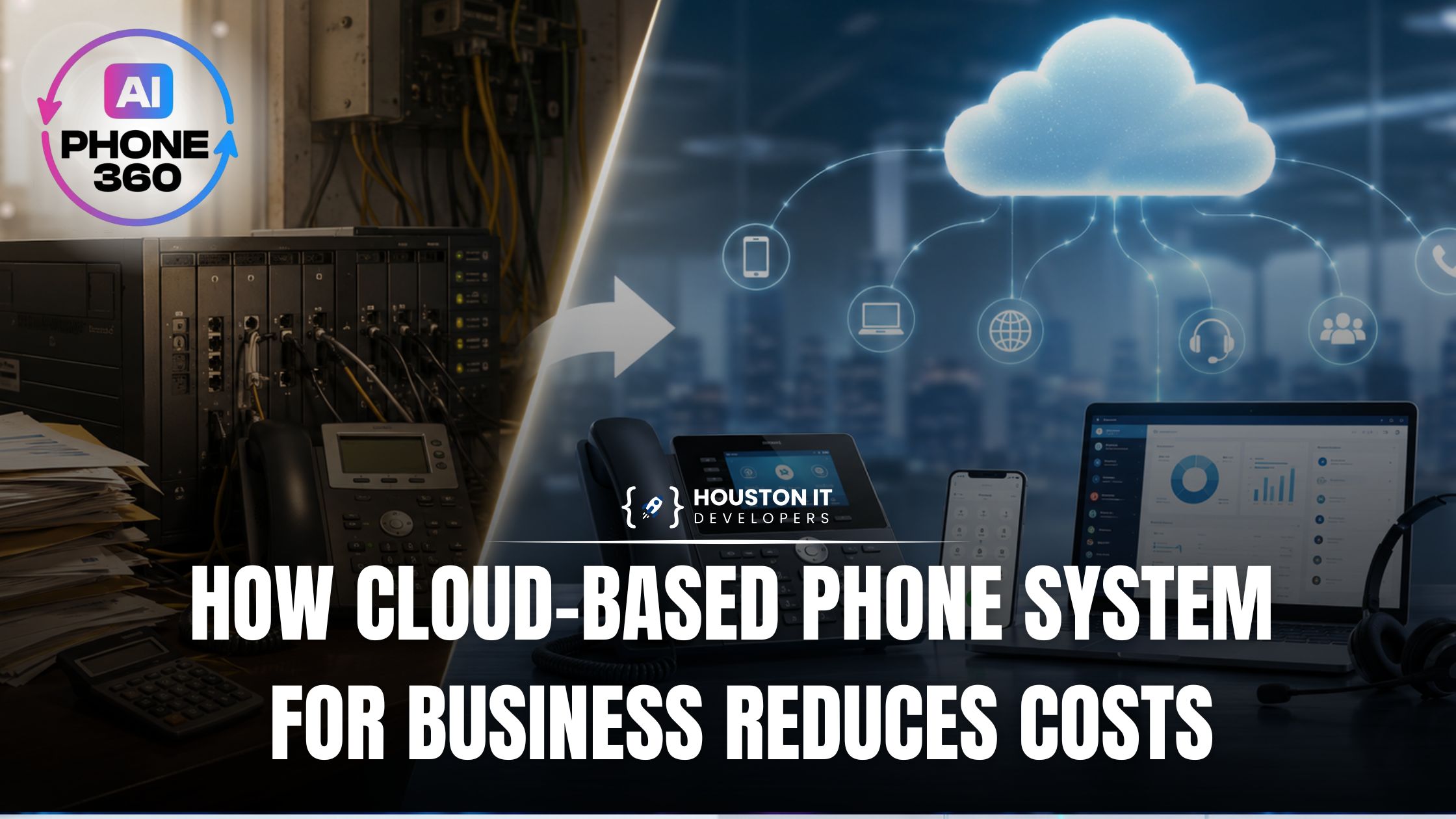
Many small and medium-sized businesses (SMBs) still operate with expensive legacy phone systems that keep increasing operational costs every year. Traditional PBX hardware requires major upfront investment, ongoing maintenance, costly upgrades, and dedicated IT support while offering limited flexibility for today's remote and hybrid work environments.
A cloud based phone system for business changes this outdated approach by replacing expensive on-site infrastructure with a scalable, cost-efficient communication solution. Businesses can reduce both immediate and long-term expenses while improving flexibility, productivity, and customer communication.
This guide explores the financial benefits, operational advantages, and the factors businesses should evaluate before switching to a modern cloud phone system like AI Phone 360.
Moving From Expensive PBX Hardware to Predictable Monthly Costs
Understanding the difference between capital expenditure (CAPEX) and operational expenditure (OPEX) is key to recognizing why businesses are abandoning traditional systems.
Traditional PBX systems require CAPEX:
- Server hardware and on-site equipment: $5,000–$15,000+
- Professional installation and telecom wiring: $2,000–$5,000
- Maintenance contracts and support: $1,000–$3,000 annually per location
- Upgrade fees when systems age or user counts grow
- Repair costs when components fail
These upfront costs are substantial, and they are just the beginning. As businesses grow, add locations, or upgrade technology, the expenses compound. A company adding 20 new employees might need to invest another $10,000 just to expand PBX capacity.
Cloud-based business phone systems operate on OPEX:
- Predictable monthly subscription instead of large upfront outlays
- No hardware to purchase or maintain
- Automatic updates and feature additions included
- Scales instantly — add users without infrastructure investment
- Transparent pricing with no surprise maintenance costs
The math is compelling. A 50-person company using traditional PBX might spend around $50,000 upfront plus roughly $15,000 annually in maintenance. The same company on a cloud based phone system pays a predictable monthly subscription with zero hardware investment, and over three years the savings can reach tens of thousands of dollars.
Direct Cost Savings Businesses Notice Immediately
Beyond eliminating hardware expenses, companies experience measurable operational savings the moment they switch to cloud communication.
Elimination of On-Site Infrastructure
- No server rooms, phone closets, or IT equipment racks
- No emergency power supplies (UPS) or cooling systems
- Reduced facility costs and simplified IT management
- One less reason to hire dedicated telecom support staff
Dramatically Lower Long-Distance and International Calling
Traditional carriers charge $0.05–$0.25 per minute for long-distance calls. VoIP providers typically charge flat rates for unlimited long-distance, or a few cents per minute for international calls. A sales team making frequent calls to remote clients sees immediate savings.
Reduced Repair and Replacement Costs
Traditional phone systems fail, sometimes catastrophically. A hardware failure can disable an entire office's communications, repairs run $500–$2,000+, and replacements can cost tens of thousands. Cloud systems are redundant by design. If your internet connection fails, calls route through backup connections. No single point of failure means no expensive emergency repairs.
AI-Powered Automation Reduces Labor Costs
Modern cloud phone systems automate tasks that traditionally required staff:
- Intelligent call routing: calls automatically reach the right department or team member without manual transfer queues
- AI voicemail transcription: voicemails convert to text instantly, so users can skim messages instead of listening to each one
- Automated call summaries: AI captures key details from customer interactions, eliminating manual note-taking
- AI receptionist functionality: automated greetings and call screening handle routine inquiries, freeing staff for higher-value work
- Lead capture automation: important customer information is logged automatically, improving follow-up
These features don't just save money, they improve response times. Fewer missed calls and faster customer contact translate to more closed deals and higher customer satisfaction.
As an illustration, a 25-person marketing agency that hands routine call routing and post-call summaries to AI can sharply cut the time staff spend on phone administration and shorten customer response times from hours to minutes.
Why Businesses Choose an AI-Assisted System Over Traditional Phone Systems
A cloud based phone system for business does more than reduce communication costs. It gives companies a smarter, more efficient way to manage customer calls, team collaboration, and daily operations through AI-assisted automation and cloud connectivity. AI Phone 360 builds on this approach by combining these capabilities into a unified platform designed to help businesses streamline communication and improve responsiveness at scale — with flat-rate plans from $19.99/mo that include unlimited team members, so you are not paying per seat.
AI Phone 360 combines the following:
- Cloud calling infrastructure: calls route through secure, redundant data centers with no single point of failure
- AI-powered communication tools: intelligent automation handles routine tasks while keeping humans in control
- Universal accessibility: works on smartphones, computers, or office phones whether employees are in the office, at home, or on the road
- Unified business communication: all calls, messages, and customer interactions in one platform
Productivity gains are substantial:
- Fewer missed calls: intelligent routing helps calls reach someone, every time
- Faster customer response: team members can answer from anywhere, anytime
- Centralized communication: no more scattered voicemail inboxes or missed messages across devices
- Remote team flexibility: employees work from anywhere without sacrificing professional phone capabilities
The remote-work advantage cannot be overstated. Businesses with cloud phone systems can scale to fully distributed teams almost instantly, while those on legacy PBX face a choice between expensive emergency upgrades or degraded communication.
Who Benefits Most From AI Phone 360?
While any business benefits from cost reduction and improved communication, specific industries see outsized gains:
- Law firms: handle complex client calls with intelligent routing and automated voicemail summaries
- Marketing and creative agencies: coordinate team calls across time zones with unified communication
- Healthcare clinics: manage patient appointments, messages, and emergencies with automated systems and detailed call records
- Contractors and field service: maintain professional communications regardless of job-site location
- Multi-location businesses: create a unified communication network across all offices without expensive infrastructure at each site
Hidden Costs to Watch for Before Switching to a Cloud Phone System
A balanced perspective means acknowledging that cloud phone systems are not universally perfect. Understanding potential hidden costs helps businesses make informed decisions.
Internet Dependency Is Real
Cloud phone systems rely entirely on internet connectivity. Businesses in areas with unreliable broadband should verify their ISP's uptime guarantee and consider backup connectivity options (4G/LTE hotspot, secondary internet provider). This is not a cost, but it requires honest assessment.
Common Add-On Expenses to Evaluate
- Premium features: advanced reporting, call recording, or custom integrations may incur additional monthly fees
- Onboarding assistance: professional setup for complex systems can carry a one-time fee
- Employee training: if staff require hands-on training beyond self-service documentation, budget for this
- Number porting: moving existing phone numbers from legacy carriers may carry a per-number fee
- Integration costs: connecting the phone system to CRM or business software may require professional setup
Transparent pricing matters. Some providers front-load costs in the marketing phase, then reveal add-ons during implementation. Evaluating providers responsibly means asking upfront:
- What is included in the base subscription?
- Which features cost extra?
- Is setup free or paid?
- Are there cancellation fees or long-term contracts?
- What is the customer support response time?
- How easy is it to scale up or down?
Checklist for Evaluating Cloud Phone Providers
- Confirm internet bandwidth requirements align with your current setup
- Request a detailed pricing breakdown with no surprises
- Ask for customer references from companies similar to yours
- Test the mobile app and desktop client before committing
- Verify SLA (Service Level Agreement) uptime guarantees
- Confirm integration capabilities with your existing tools (CRM, accounting software, etc.)
- Review customer support availability (24/7, business hours, chat/email/phone)
- Understand the implementation timeline and resource requirements
Final Thoughts on Cloud-Based Phone Systems for Business
A cloud based phone system for business gives SMBs a practical way to cut costs without sacrificing communication quality. By replacing expensive PBX hardware with predictable monthly pricing, businesses lower upfront investment, reduce maintenance expenses, improve scalability, and support remote teams more effectively. AI-powered features also help teams save time, respond faster, and manage customer calls with less manual effort.
The key takeaway is simple. Businesses do not just save money by moving to the cloud. They also gain flexibility, better visibility, and a more modern communication system that can grow with them. That makes the switch especially valuable for companies that want to control overhead while improving service and productivity.
If your current phone system is creating unnecessary costs or limiting your team, now is the right time to make a change. Explore AI Phone 360, then download it on the App Store or get it on Google Play to start using a smarter cloud phone solution today.
FAQs
What is a cloud-based phone system?
It is a phone system that runs over the internet instead of traditional phone lines. It lets businesses make and receive calls using software on computers or mobile devices, without on-site PBX hardware.
What is the best cloud-based phone system for business?
The best system depends on business needs like scalability, AI features, and pricing. Solutions like AI Phone 360 stand out for combining cloud calling with automation and business communication tools — with flat-rate plans and unlimited team members instead of per-seat fees.
How much does a cloud phone system cost?
Many cloud phone systems charge $15 to $25 per user per month, and pricing varies with features like AI tools, call recording, and integrations. AI Phone 360 uses flat-rate pricing from $19.99/mo that includes unlimited team members, so cost tracks your call volume rather than headcount.